AI Integration · Cost Management
GPT-5.6 vs Gemini 3.7 Flash vs Grok 4.6: API Pricing Compared (August 2026)
A side-by-side look at what OpenAI, Google, and xAI actually charge per million tokens right now, including the tiers within each model family, so you can price out a real workload before you pick a provider.

Shashikant Gupta
5 min read
Sponsored
“How much does the API actually cost” is a question every team building an AI feature ends up answering the hard way, after the first month’s invoice arrives. The honest answer changes constantly, current model families ship multiple pricing tiers, run time-limited introductory discounts, and charge differently depending on context length, so a number you saw quoted three months ago is probably already wrong. Here’s what OpenAI, Google, and xAI are actually charging as of this week, tier by tier.
The headline numbers, per million tokens
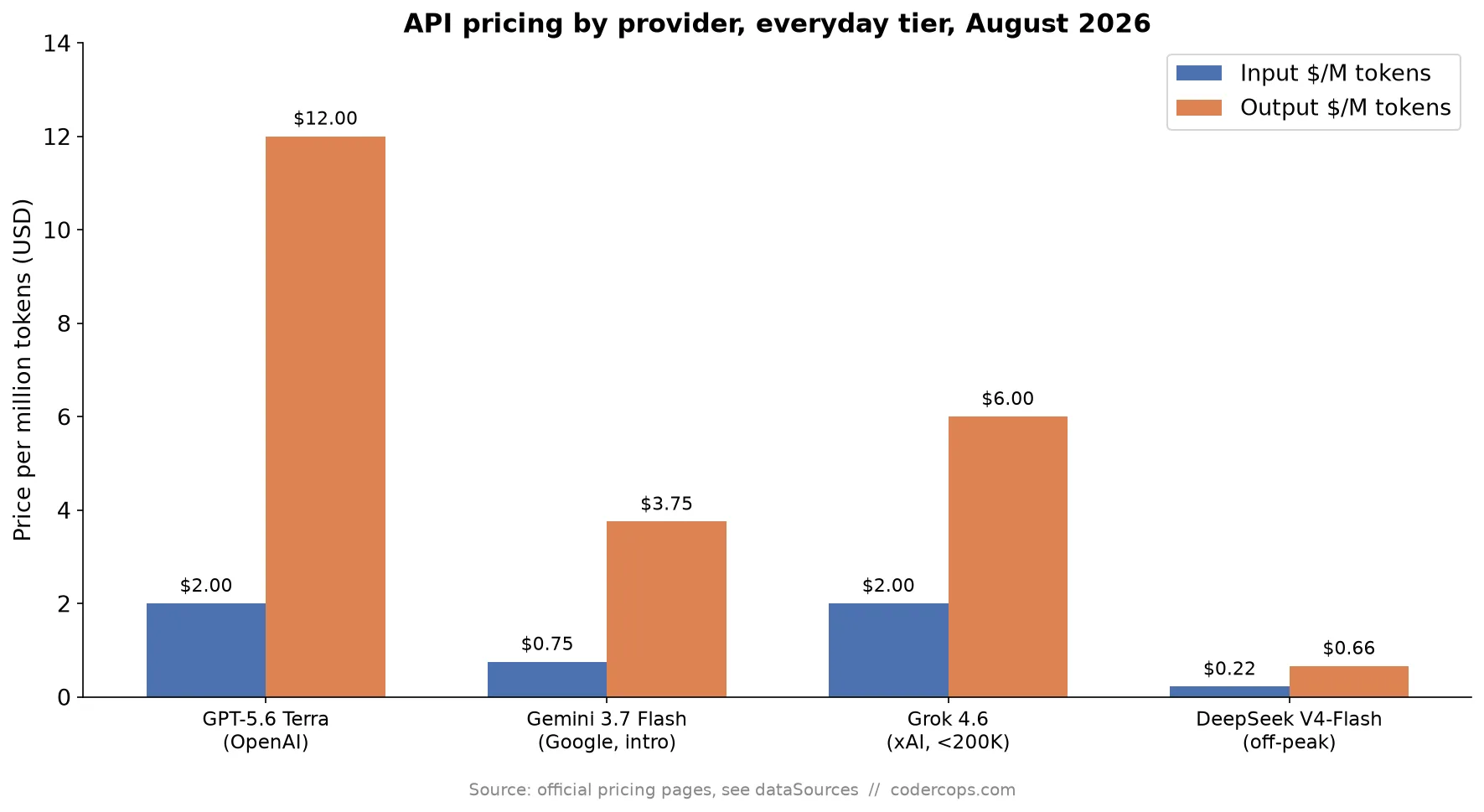
| Model | Input | Output | Notes |
|---|---|---|---|
| GPT-5.6 Sol (OpenAI, flagship) | $5.00 | $30.00 | Effective July 30, 2026 |
| GPT-5.6 Terra (OpenAI, balanced) | $2.00 | $12.00 | Effective July 30, 2026 |
| GPT-5.6 Luna (OpenAI, high-volume) | $0.20 | $1.20 | Effective July 30, 2026 |
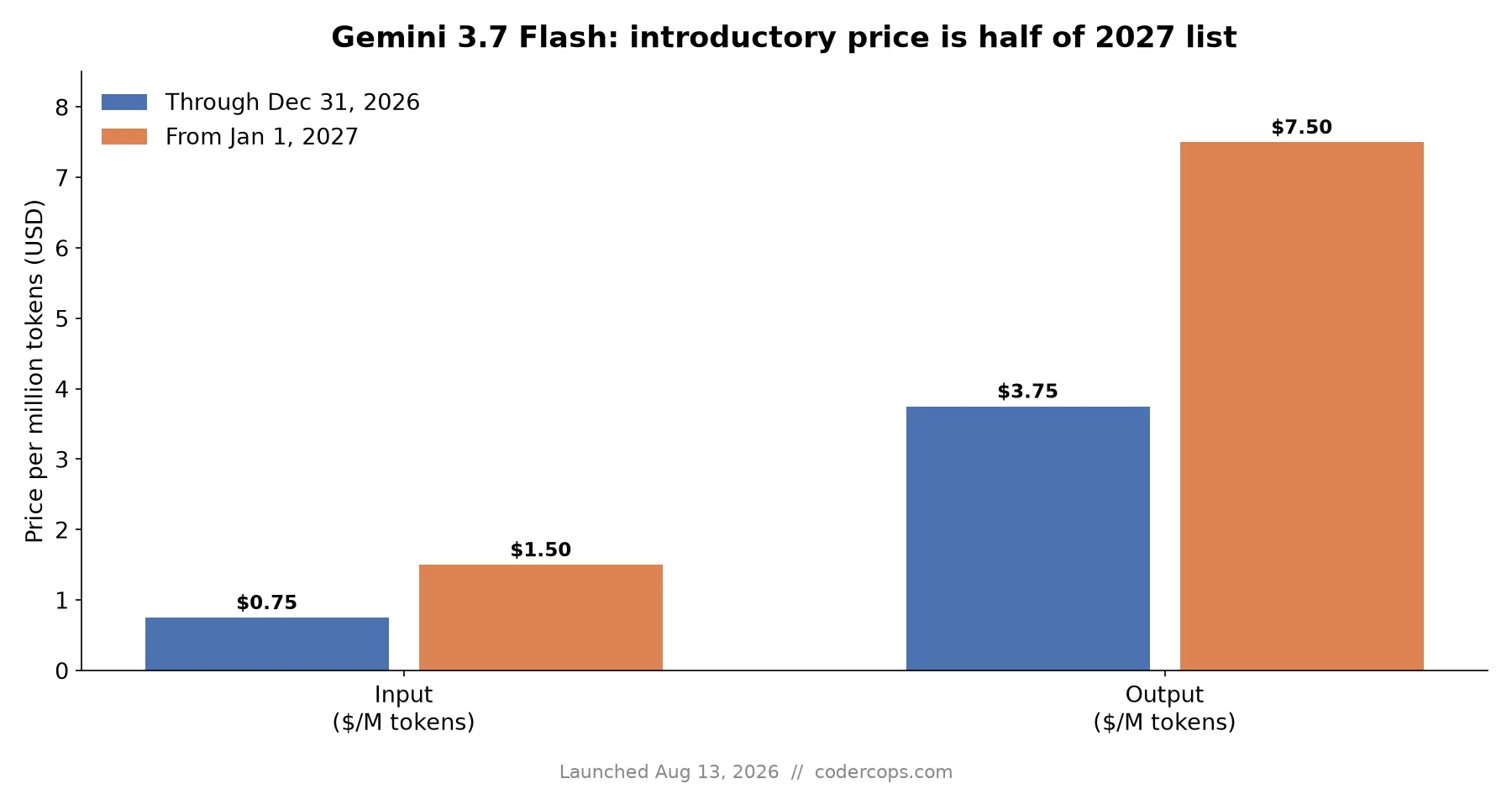
| Gemini 3.7 Flash (Google) | $0.75 | $3.75 | Introductory, through Dec 31, 2026 |
| Gemini 3.7 Flash (Google, standard) | $1.50 | $7.50 | Takes effect Jan 1, 2027 |
| Grok 4.6 (xAI, under 200K context) | $2.00 | $6.00 | $0.50/M for cached input |
| Grok 4.6 (xAI, over 200K context) | $4.00 | $12.00 | Entire request billed at this rate |
| DeepSeek V4-Flash (off-peak) | $0.22 | $0.66 | 01:00-04:00, 06:00-10:00 UTC |
| DeepSeek V4-Flash (peak) | $0.44 | $1.32 | All other hours |
Every one of these tiers is priced for a different job, and the sticker price alone tells you less than the ratio between input and output cost. OpenAI keeps a fixed 6x multiplier across its entire GPT-5.6 family, which makes back-of-envelope math easy: estimate your input and output token counts, multiply by the Terra or Luna rate depending on the quality bar you need, and you have a real number. Google and xAI don’t hold that ratio as tightly, Gemini 3.7 Flash runs 5x and Grok 4.6 runs 3x, which matters more for output-heavy workloads like long-form generation than for short-answer or classification tasks.
The two details that actually move your bill
Two things in that table matter more than the headline number for a real production workload.
Time and context sensitivity aren’t edge cases. DeepSeek’s peak/off-peak split doubles your cost depending purely on when a request lands, and Grok 4.6’s 200K-token threshold doubles the entire request’s cost, not just the tokens past the line, the moment your context window crosses it. A workload that regularly sends long documents, large codebases, or extended conversation history as context needs to budget for the higher Grok tier by default, not treat it as an occasional edge case.
Introductory pricing has an expiration date. Gemini 3.7 Flash’s current rate is exactly half of what it becomes on January 1, 2027. If you’re building cost projections for a product launching or scaling into next year, model the standard rate, not the launch discount, or your projected margins will be wrong by a predictable amount on a predictable date.
Where prompt caching changes the calculus
None of the numbers above account for caching, and for most production agent or RAG setups, caching is where the real savings live. A system prompt, a set of few-shot examples, or a large retrieved-context block that repeats across calls is exactly the pattern caching is built for: OpenAI prices a cache read at a tenth of the standard input rate, and DeepSeek prices a cache hit on V4-Flash at roughly 50 times cheaper than a cache miss. A workload with a large, mostly-static prompt prefix can end up cheaper on a provider with a “more expensive” headline rate but stronger caching discounts than on one with a lower sticker price and a weaker cache. If you’re optimizing an existing LLM API bill rather than picking a provider from scratch, checking your actual cache hit rate before switching models is usually the higher-leverage move.
How to actually pick
Estimate your real input and output token counts from production traffic, not a demo, then run that ratio against each tier in the table above rather than comparing headline input prices alone, since output tokens cost several times more than input tokens across every provider here. If your workload sends long context regularly, price it against Grok’s over-200K rate and DeepSeek’s peak rate, not the best case. And if quality at the low end matters for your use case, don’t assume the cheapest tier is a like-for-like swap for a flagship model. Run your own eval set against the cheaper tier before committing a production workload to it. Our team runs exactly this kind of cost-versus-quality evaluation for clients migrating an AI feature between providers, and the answer is rarely just “pick the lowest number in the pricing table.”
Frequently asked questions
- Which LLM API is cheapest right now?
- For raw per-token price, DeepSeek's V4-Flash model is the cheapest of the models compared here, at $0.22 per million input tokens and $0.66 per million output tokens during off-peak hours (01:00-04:00 and 06:00-10:00 UTC), rising to $0.44/$1.32 during peak hours. Among the major US labs, OpenAI's GPT-5.6 Luna tier, at $0.20 input and $1.20 output per million tokens, is priced closest to that range and doesn't carry a time-of-day pricing split.
- Why does OpenAI have three different GPT-5.6 prices?
- GPT-5.6 ships as three named tiers rather than one price point: Sol ($5/$30 per million tokens) is the flagship tier for tasks that need the strongest reasoning, Terra ($2/$12) is a balanced middle tier, and Luna ($0.20/$1.20) is built for high-volume workloads where cost matters more than squeezing out the last bit of quality. Output costs exactly six times input across all three tiers, which makes it straightforward to estimate a bill once you know your input-to-output token ratio.
- Is Gemini 3.7 Flash's price going to change?
- Yes. Google is running introductory pricing of $0.75 per million input tokens and $3.75 per million output tokens through December 31, 2026. Standard pricing takes effect January 1, 2027, at $1.50 input and $7.50 output, exactly double the introductory rate, and context caching pricing follows the same doubling from $0.075 to $0.15 per million tokens.
- What happens to Grok 4.6 pricing on long context?
- Grok 4.6 charges $2 per million input tokens and $6 per million output tokens for prompts under 200K tokens. Once a single request crosses that 200K token threshold, xAI bills the entire request, not just the portion above the threshold, at the higher rate: $4 input and $12 output per million tokens. A workload that regularly sends long documents or large codebases as context should budget for the higher tier, not the headline rate.
- How much does prompt caching actually save?
- It depends on the provider, but the discounts are large enough to change which model is cheapest for your specific workload. OpenAI prices a cache read at one-tenth the normal input rate. DeepSeek prices a cache hit on V4-Flash at roughly 50 times cheaper than a cache miss. If your application resends a large, mostly-static system prompt or a few-shot block on every call, which most production agent and RAG setups do, caching can matter more to your actual bill than which model's headline price looked lowest.
Sources
Sponsored
More from this category
More from AI Integration
 R.01
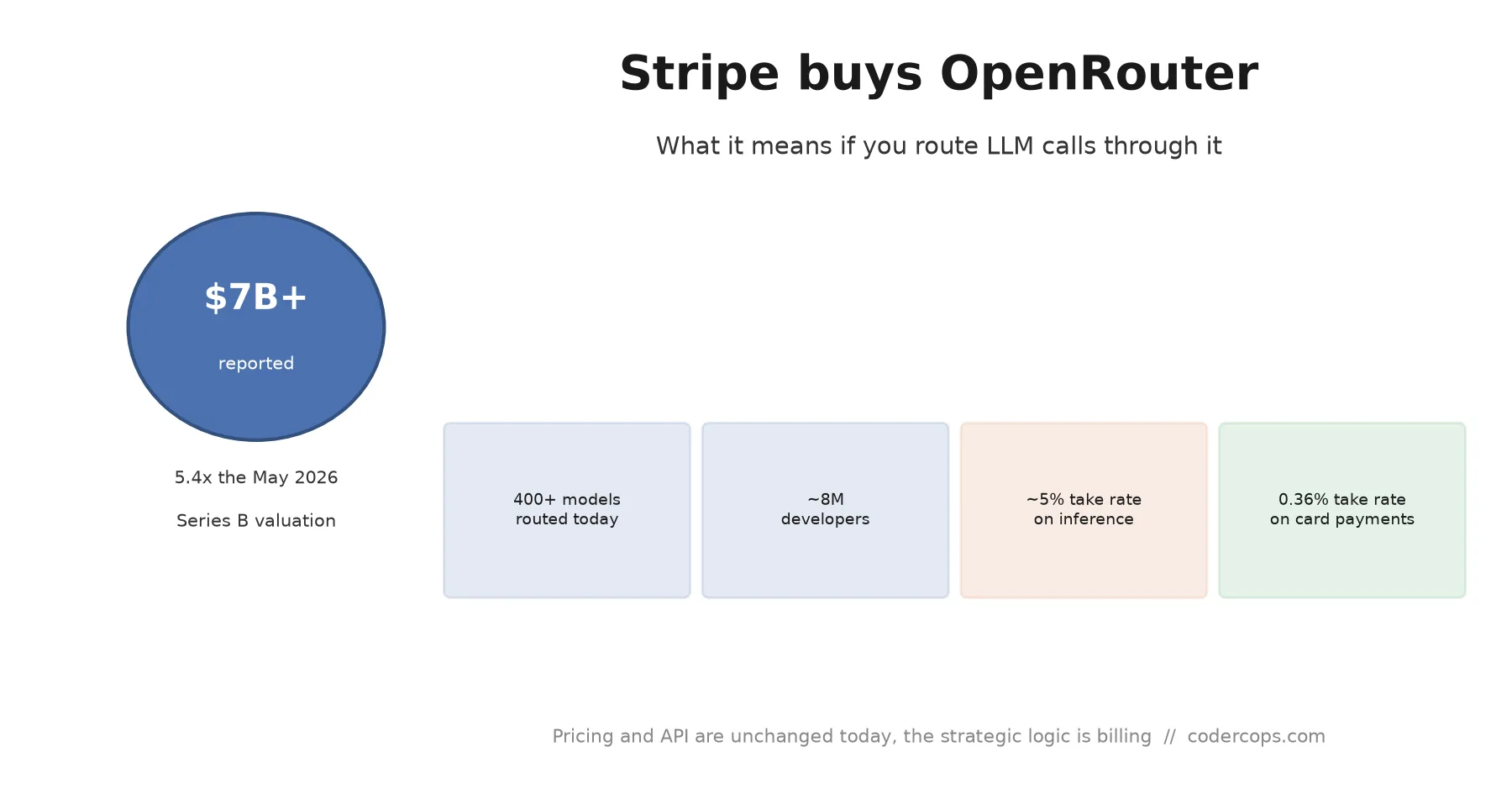
R.01 Stripe Bought OpenRouter for $7B. Here's What It Means If You Route LLM Calls
 R.02
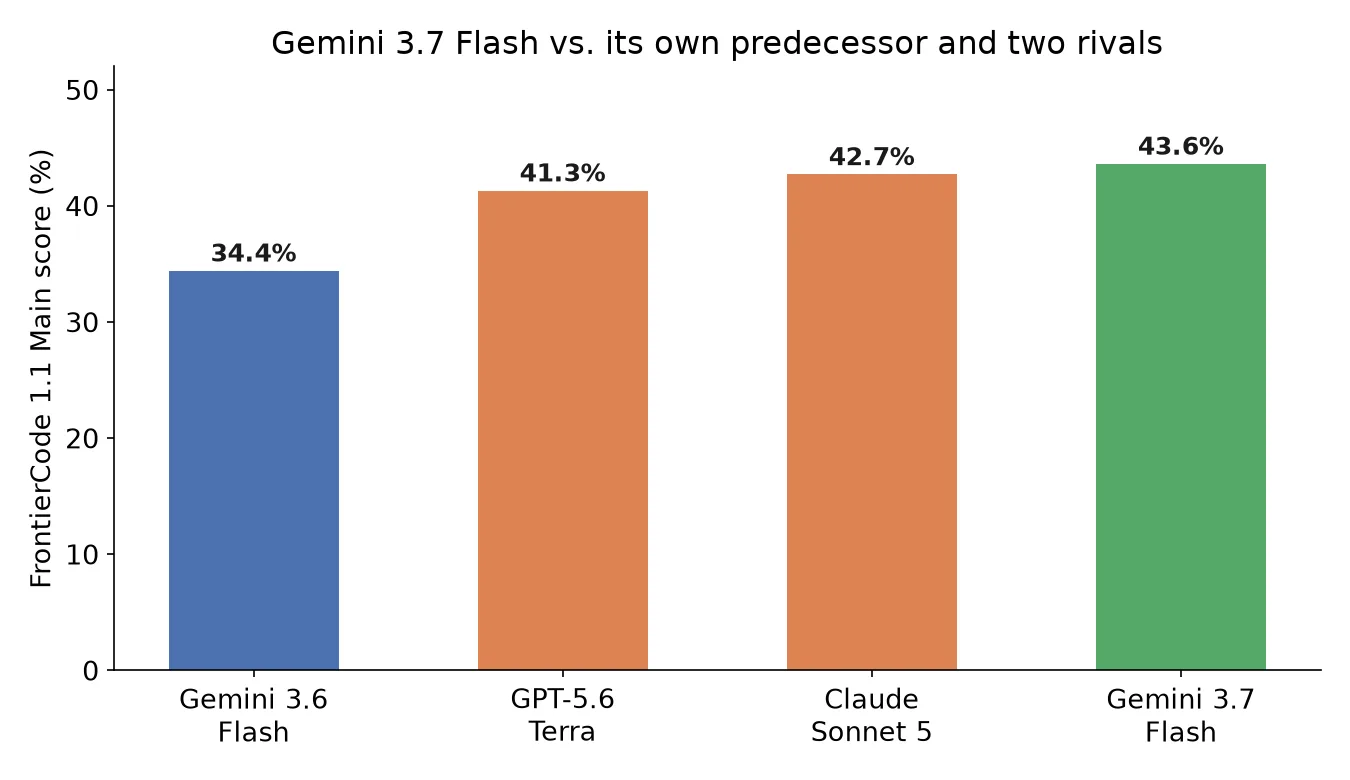
R.02 Gemini 3.7 Flash Is Out: What Google's Coding-Focused Model Actually Changes
 R.03
R.03 Gemini 3.7 Flash Is Out: Google's Cheap, Fast Coding Model Just Got Better at Both
Sponsored
Discussion
Join the conversation.
Comments are powered by GitHub Discussions. Sign in with your GitHub account to leave a comment.
Sponsored